
Posted on: March 11, 2026

Expressing 40 years of frustration since founding INVC... Peter Wilson
Q: Why is most noise control so unnecessarily eye-wateringly expensive?
A: It is largely based on guesswork without the diagnosis that cuts typical noise control project costs by 50% - 90%
Q: Why is detailed noise source diagnosis such a rarity?
A: Education and training? Ignorance? I have no idea...
The gold-plated elephant in the mitigation room for both occupational and environmental noise that, as an engineer, I find incredibly frustrating, is the general complete lack of any form of source diagnosis.
The consequential costs can be soul destroying...
The human and financial costs

How about $5million + >$200k in fines completely wasted on consultant recommended noise control barriers based on a guess that 1 minute of my time on diagnosis from the TV video soundtrack proved couldn’t possibly work. They didn’t... This lack of diagnosis:
- costs organisations a fortune, both capital and operational costs
- costs employees their hearing health, increasing their risk of dementia
- costs local communities their quality of life, their mental and physical health
- costs the regulators resources to deal with these consequences
It doesn’t have to be this way.
The current almost ubiquitous and ineffective approach to noise control
You have a noise problem. Perhaps a production line generating 93dB(A). Perhaps a chiller or large ASHP that is the source of noise complaints from residents. You employ a consultant or a supplier for advice, advice that is almost always based on a guess founded on a version of the following philosophy:
- There is a noise problem caused by a noise source
- The noise source is a monolithic [“black box”] that is radiating noise
- Therefore, the only solution is to enclose that black box within another (special) [“acoustic box”] – or add a silencer or an acoustic barrier...
Zero diagnosis as to why the plant is noisy. No investigation into the source of the noise.
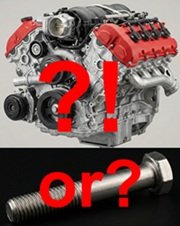
It’s like taking your car to a garage because there’s a rattle from the engine. Without lifting the bonnet, the mechanic says "You need a new engine."
"A new engine?" you say, imagining the cost and the hassle.
"Yes, a new engine. I know this, for I am an expert..."
If you lifted the bonnet and diagnosed the cause of the rattle, you might find it‘s simply a loose bolt on the exhaust heat shield.
- Acoustic [Black box] thinking: you need a new engine
- Diagnostic thinking: Why is it noisy? Diagnose the cause. It’s a loose bolt. Tighten bolt. Problem solved...
This is a major failing of the noise consultancy and control industry
The global noise consultancy and control industry is failing everyone, the public, the employees, the companies paying the bills and the regulators. It's an industry based almost entirely on costly antediluvian palliatives (barriers, enclosures, silencers), not on modern engineering source control.
Why is the overall standard so abysmal?
It’s a fundamental failure to diagnose. In any other field - medicine, automotive repair, structural engineering - a practitioner must identify the precise cause of a problem before prescribing a cure. In acoustics, however, as consultants routinely skip this step, their recommendations are often based on guesswork.

Diagnosis, determining the exact causes of noise, offers the opportunity to wield a noise control scalpel to excise the just precise cause of the problem instead of battering it with an expensive bought-in bludgeon. If, and only if, engineering noise source control is not practical, should you consider the traditional palliative solutions. Sometimes they are the best option...
This is not just the grumbling of a cynical veteran engineer. The statistics are damning.
2023 UK Environment Agency noise report survey: 95% were inadequate.
2025 HSE noise report survey: 60% inadequate, 77% had no useful noise control advice
Let that sink in. In most cases when you are handed a glossy report filled with technical jargon and compliance statements. That document is probably not fit for purpose and the quality of noise control advice is a major factor.
What does the noise source diagnostic process involve?
That will be the subject of future posts. Dot dot dot...
