Accurate, effective frequency analysis - source ID + rapid complaint resolution
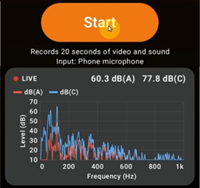
We have tested many apps, most of which were not designed by users and hence are overly technical and difficult to use. So we have developed our own free app...
It is available for free on both Android and iOS.
or search "Frequency Master Lite"
...a really great experience... very easy to use...graphs were clear ... easy to explain results to the complainant at the time of use. Considering it was my first time using the app, it's a testament to the thought that had gone into the report output and the simplicity of the measurement process. EHO
These videos are detailed guides to using our free Frequency Master Lite app for narrow band tonal noise analysis, hum analysis and identification (FFT noise analysis). Not that they are necessary, FM is completely intuitive and requires no expertise whatsoever.
The app records a short video clip and provides a live analysis of the sound. This information, the clip and the analysis, can then be shared via various services (Whatsapp, email etc), but typically you would email it to yourself and then forward to a regulator or planner.
Why would anyone use old fashioned 1/3 octaves that are not only poor at identifying tones, from hums to high frequency squeals, but that also throw away so much useful identification and diagnostic information when our smartphone FFT app can provide you with an accurate evaluation?
There is no valid excuse to rely on subjective impressions or third octaves when tonal noise may be involved.
This is a simple process that dramatically improves noise complaint resolution, source identification and, with our help, the optimum mitigation techniques based on the best of current technology (Best Practicable Means (BPM) - Best Available Technology (BAT) evaluation).
Data Centre (USA "Center") noise evaluation example
Worldwide, there is a tidal wave of new data centers built and planned. Noise, especially low frequency (LF) noise (a hum or drone), is a major environmental issue that affects local communities. A key fact is that data centres typically generate low frequency noise in the form of hums that travel for miles that is not accounted for in many ordinances and planning specifications that are predominantly based on dB(A).
Existing: Frequency Master is the answer to the question: "How do we evaluate the noise from existing data centers?" It's now possible for anyone, complainant or regulator, to assess LF hum or drone accurately and to use that information to pinpoint and justify what action should be taken to mitigate.

Planned: Frequency Master is also the answer to the question: "How do we ensure that new data centres will not cause noise complaints?" When noise consultants generate predictions for noise impact statements, they do not evaluate tones. Part of the reason is that suppliers never provide narrow band noise data. Frequency Master solves this problem too: we ask for an app analysis for a similar installation anywhere on the planet to assess tonal content. Simple and effective.
Mitigation: finally, Frequency Master is also used to determine the precise causes of tonal noise to guide modern engineering noise control technology that can actually improve data center cooling by making fans more efficient (self-financing).
Q: once you've analysed, what next? A: save time...
The results of your instant field narrow band analyses may be all you need. You can determine if there is/isn't a tone. You can then use the app to identify the source(s) by visiting potential plant and matching the complainant tones with the tones from each potential source there and then to provide definitive proof. Alternatively, if there is no access, use plant technical specifications (speeds, number of blades on fans etc) to match the source(s).
You can then share the results and, if Environmental Agencies or regulators need help with tonal noise source ID or the mitigation options based on current worldwide best practice, then you can contact us to make use of our remote analysis service.
